Editor’s Note — Shashwat DC
If and when we talk about environment in India, we cannot but talk about Prime Minister Indira Gandhi. There are many questions and counterpoints to the many things that she did in terms of dismantling domestic institutions of power, promoting nepotism, bulldozing her way over the opposition, and so on. But on the aspect of environment and nature — her work and legacy are irrefutable.
I have been lucky to study the work undertaken by Mrs. Gandhi, and quite privileged to speak in person with people who worked with her on many policy issues — be it MK Ranjitsinh or Mouni Malhotra — tracing the very roots of her nature consciousness.
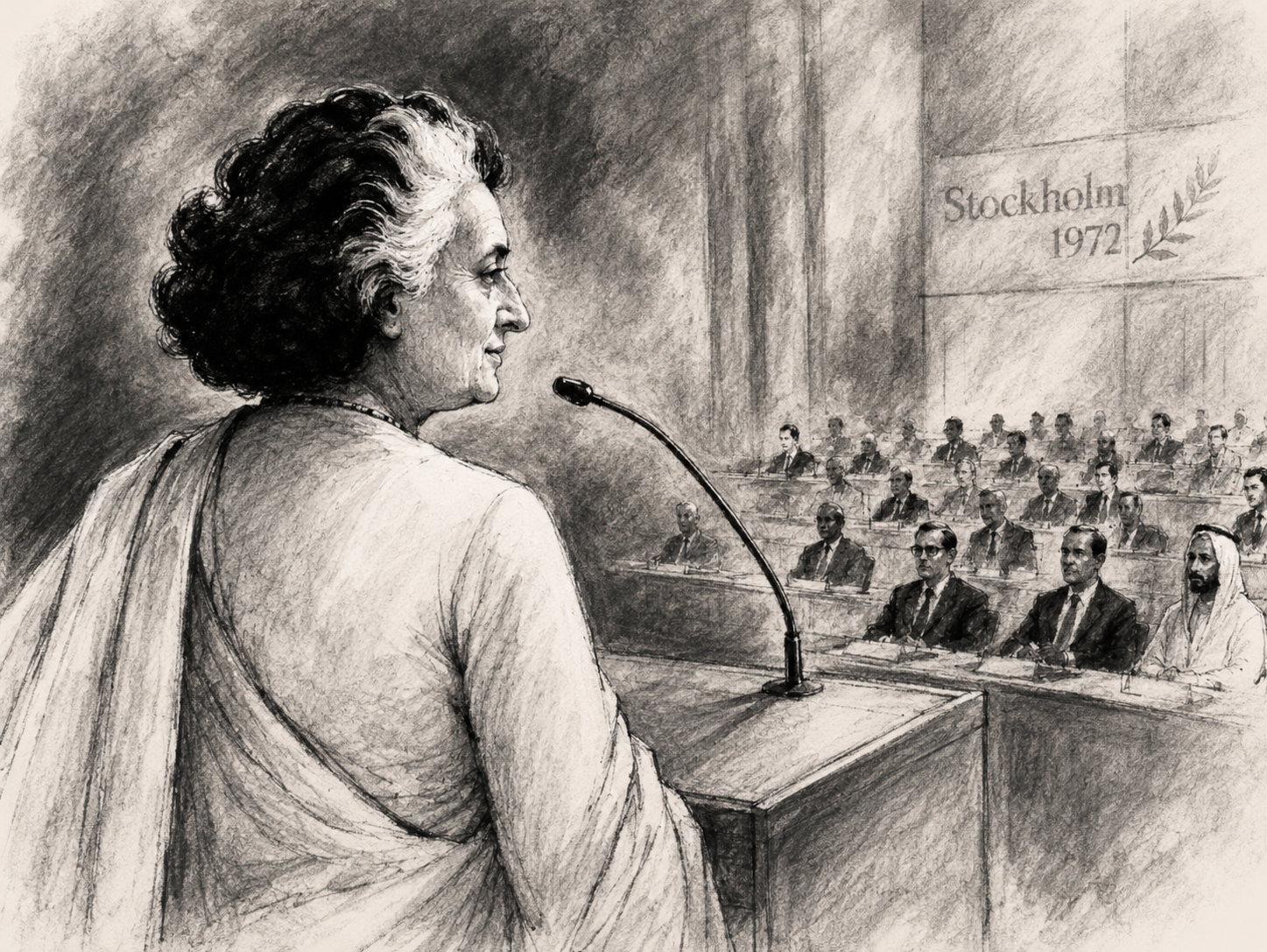
And while we know Mrs. Gandhi for Project Tiger, the protected parks, the Wildlife Protection Law, Silent Valley and others, one thing truly stands out — her speech on the opening day of the United Nations Conference on the Human Environment in Stockholm in 1972. Mind you, she was the only ‘world leader’ attending the conference, other than Prime Minister Olof Palme, who was also the host.
Back then, the world was stirring to environmental consciousness — Rachel Carson’s Silent Spring had created an impact and the Earthrise photo had revealed to us the fragility of our existence — and in those times, here was a prime minister of a developing nation from the Global South striding forth and delivering a speech that very few since have had the courage or clarity to match.
Interestingly, Mrs. Gandhi spoke about poverty and pollution as the same crisis. She called out the hypocrisy of wealthy nations warning the developing world about environmental destruction while having built their own prosperity on colonial extraction.
I am not sure of the immediate impact of that speech — but it did lay out a roadmap for the future: environment and humanity were intertwined in an intricate and inseparable manner. We cannot talk about conservation without talking about communities or livelihoods.
The Stockholm Conference did produce results — UNEP was created, World Environment Day was born, CITES and the World Heritage Convention followed.
Today, we are gathered again under the banner of World Environment Day. The theme this year is Climate Action. The host city is Baku. The hashtag is #NowForClimate. The planet is 1.43°C warmer than it was before the industrial age began.
At this juncture, it makes sense for us to revisit the iconic speech Mrs. Gandhi delivered and evaluate for ourselves — how far has the needle moved.
The speech has been published in full, with annotations that bring it in context with the current scenario.
The Stockholm Speech
Indira Gandhi, Prime Minister of India — Plenary address, United Nations Conference on the Human Environment, Stockholm, 5 June 1972
It is indeed an honour to address this Conference — in itself a fresh expression of the spirit which created the United Nations — concern for the present and future welfare of humanity. It does not aim merely at securing limited agreements but at establishing peace and harmony in life — among all races and with Nature. This gathering represents man’s earnest endeavour to understand his own condition and to prolong his tenancy of this planet.

I have had the good fortune of growing up with a sense of kinship with nature in all its manifestations. Birds, plants, stones were companions and, sleeping under the star-strewn sky, I became familiar with the names and movements of the constellations. But my deep interest in this our “only earth” was not for itself but as a fit home for man.
One cannot be truly human and civilised unless one looks upon not only all fellow-men but all creation with the eyes of a friend. Throughout India, edicts carved on rocks and iron pillars are reminders that 22 centuries ago the Emperor Ashoka defined a King’s duty as not merely to protect citizens and punish wrongdoers but also to preserve animal life and forest trees.
Devanampriya Ashoka — India’s 3rd century BCE emperor — banned the killing of hundreds of species and expressed remorse for the military conquest of Kalinga. In 2026, India’s forests still cover less than 22% of the land area, and the country lost over 1.5 million hectares of tree cover between 2001 and 2023. Back in the 3rd century BCE, Ashoka’s edicts protected heritage. We cannot say the same about today.
Along with the rest of mankind, we in India — in spite of Ashoka — have been guilty of wanton disregard for the sources of our sustenance. We share your concern at the rapid deterioration of flora and fauna. Some of our own wildlife has been wiped out, miles of forests with beautiful old trees, mute witnesses of history, have been destroyed. Even though our industrial development is in its infancy, and at its most difficult stage, we are taking various steps to deal with incipient environmental imbalances. The more so because of our concern for the human being — a species which is also imperiled. In poverty he is threatened by malnutrition and disease, in weakness by war, in richness by the pollution brought about by his own prosperity.
We are gathered here under the aegis of the United Nations. We are supposed to belong to the same family sharing common traits and impelled by the same basic desires, yet we inhabit a divided world.
Many of the advanced countries of today have reached their present affluence by their domination over other races and countries, the exploitation of their own natural resources. They got a head start through sheer ruthlessness, undisturbed by feelings of compassion or by abstract theories of freedom, equality or justice. Now, as we struggle to create a better life for our people, it is in vastly different circumstances.
This is the argument that has dominated every climate negotiation since Paris: the Global South did not create the climate crisis but is bearing its worst consequences. In 2024, countries like Bangladesh, Somalia and Mozambique — among the world’s lowest per-capita emitters — suffered catastrophic floods and droughts. Meanwhile, the OECD nations have collectively failed to deliver the $100 billion per year climate finance promised in 2009. Is this not global inequity?
On the one hand the rich look askance at our continuing poverty — on the other, they warn us against their own methods. We do not wish to impoverish the environment any further and yet we cannot for a moment forget the grim poverty of large numbers of people. Are not poverty and need the greatest polluters? For instance, unless we are in a position to provide employment and purchasing power for the daily necessities of the tribal people and those who live in or around our jungles, we cannot prevent them from combing the forest for food and livelihood; from poaching and from despoiling the vegetation. When they themselves feel deprived, how can we urge the preservation of animals?
How can we speak to those who live in villages and in slums about keeping the oceans, the rivers and the air clean when their own lives are contaminated at the source? The environment cannot be improved in conditions of poverty. Nor can poverty be eradicated without the use of science and technology.
“Are not poverty and need the greatest polluters?” — this single sentence has been quoted, misquoted and weaponised for five decades. Critics have used it to argue India had no obligation to limit emissions. She meant something more precise: that conservation without development is moral hypocrisy. In 2026, India has 800 million people on government food support. It is also the world’s third-largest solar capacity. Both things are true. And this dichotomy is what makes India unique.
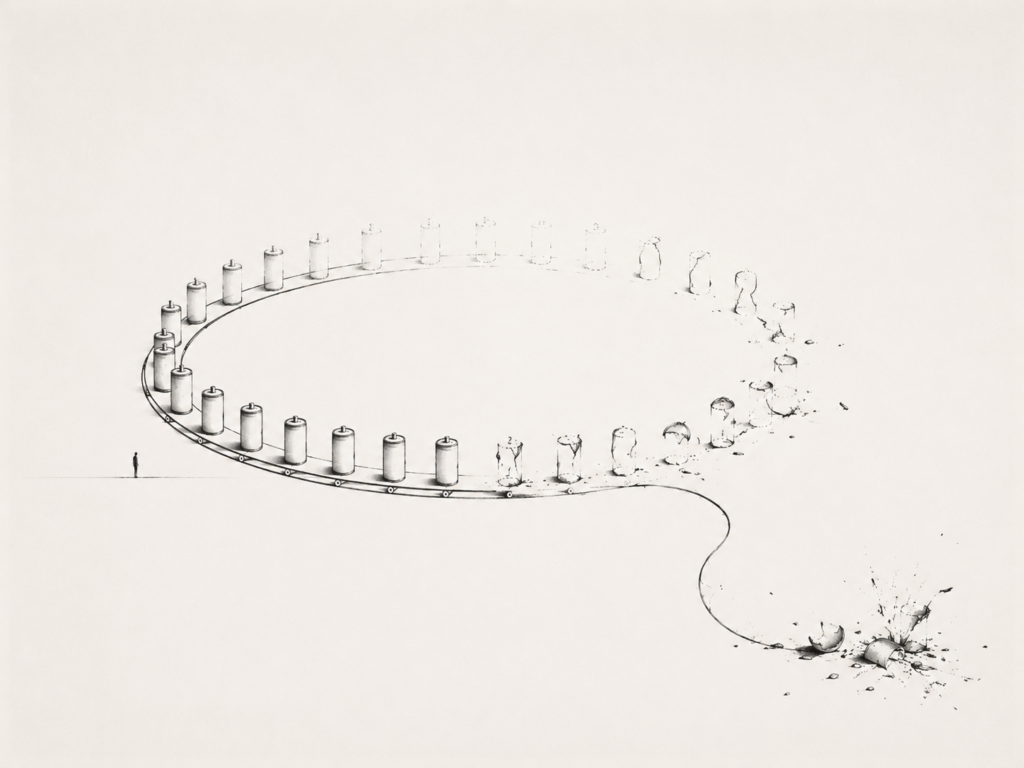
The inherent conflict is not between conservation and development, but between environment and reckless exploitation of man and earth in the name of efficiency. The industrial civilization has promoted the concept of the efficient man, he whose entire energies are concentrated on producing more in a given unit of time and from a given unit of manpower. Obsolescence is built into production, and efficiency is based on the creation of goods which are not really needed and which cannot be disposed of when discarded. What price such efficiency now, and is not recklessness a more appropriate term for such behaviour?
All the “isms” of the modern age — even those which in theory disown the private profit principle — assume that man’s cardinal interest is acquisition. The profit motive, individual or collective, seems to overshadow all else. This overriding concern with self and Today is the basic cause of the ecological crisis. Pollution is not a technical problem. The fault lies not in science and technology as such but in the sense of values of the contemporary world which ignores the rights of others and is oblivious of the longer perspective.
“Pollution is not a technical problem.” In 2026, the dominant narrative around climate change is still overwhelmingly technical: carbon capture, green hydrogen, solar gigawatts, EV fleets. The value system she identified as the root cause — the overriding concern with self and Today — has if anything intensified. Global advertising spend crossed $1 trillion for the first time in 2024, almost entirely devoted to stimulating the acquisition she warned against.
There are grave misgivings that the discussion on ecology may be designed to distract attention from the problems of war and poverty. We have to prove to the disinherited majority of the world that ecology and conservation will not work against their interest but will bring an improvement in their lives. To withhold technology from them would deprive them of vast resources of energy and knowledge.
It would be ironic if the fight against pollution were to be converted into another business, out of which a few companies, corporations, or nations would make profits at the cost of the many. Here is a branch of experimentation and discovery in which scientists of all nations should take interest. They should ensure that their findings are available to all nations, unrestricted by patents.
The carbon credit market — now worth over $2 billion annually — has been rocked by scandals involving phantom offsets sold by corporations to claim net-zero status. Climate technology patents are overwhelmingly held by the US, EU, Japan and China. The TRIPS Agreement continues to restrict technology transfer to developing nations.
Will the growing awareness of “one earth” and “one environment” guide us to the concept of “one humanity”? Will there be a more equitable sharing of environmental costs and greater international interest in the accelerated progress of the less developed world? Or, will it remain confined to a narrow concern, based on exclusive self-sufficiency?
The ecological crises should not add to the burdens of the weaker nations by introducing new considerations in the political and trade policies of rich nations.
Life is one and the world is one, and all these questions are inter-linked. The population explosion; poverty; ignorance and disease, the pollution of our surroundings, the stockpiling of nuclear weapons and biological and chemical agents of destruction are all parts of a vicious circle. Each is important and urgent but dealing with them one by one would be wasted effort.
We must re-evaluate the fundamentals on which our respective civic societies are based and the ideals by which they are sustained. If there is to be a change of heart, a change of direction and methods of functioning, it is not an organization or a country — no matter how well intentioned — which can achieve it. There is no alternative to a cooperative approach on a global scale to the entire spectrum of our problems.
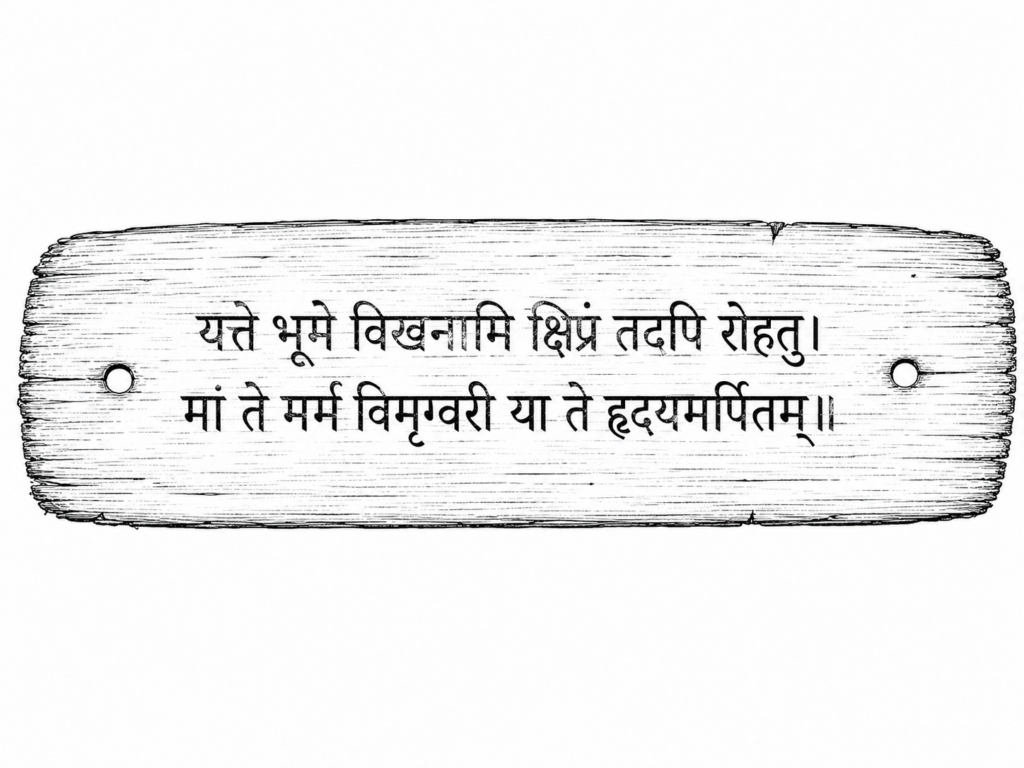
Modern man must re-establish an unbroken link with nature and with life. He must again learn to invoke the energy of growing things and to recognize, as did the ancients in India centuries ago, that one can take from the Earth and the atmosphere only so much as one puts back into them. In their hymn to Earth, the sages of the Atharva Veda chanted: “What of thee I dig out, let that quickly grow over, Let me not hit thy vitals, or thy heart.” So can man himself be vital and of good heart and conscious of his responsibility.
A Final Note
The Stockholm Conference gave the world UNEP, World Environment Day, CITES, and the World Heritage Convention. It placed the environment at the centre of international diplomacy for the first time. These are not small things.
But the question Indira Gandhi asked — “Will the growing awareness of one earth guide us to the concept of one humanity?” — has never been answered with a yes. Fifty-four World Environment Days later, on a planet 1.43°C warmer, with 3.6 billion people in climate-vulnerable conditions, the question stands exactly as she had posed it in 1972.
— SustainabilityZero, 5 June 2026