The IPCC’s first-ever Special Report on Cities is open for expert review until 3 July 2026. Understanding why that matters begins with understanding what urbanisation has already done to our planet — and what it is about to do to India.
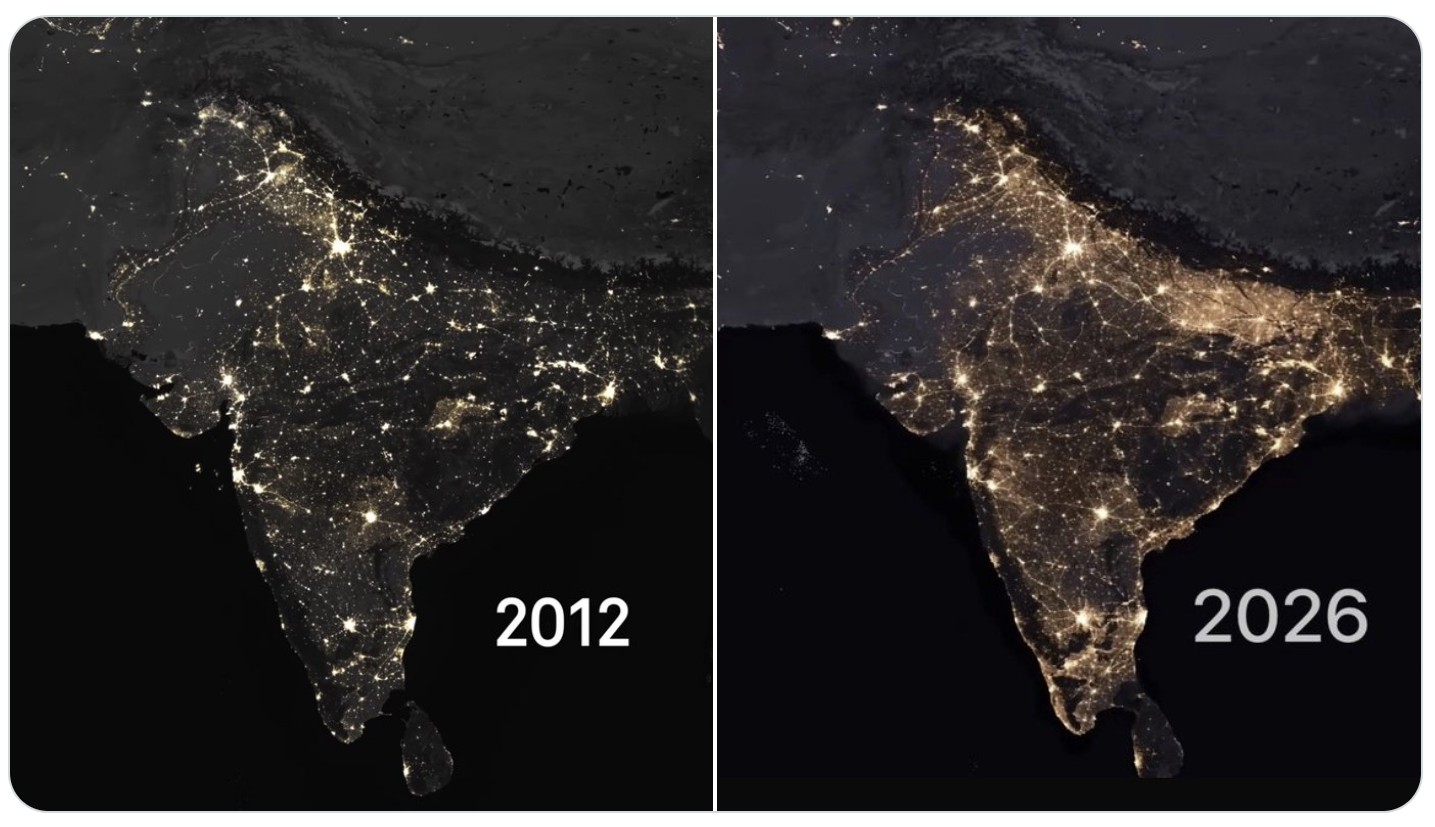
NASA uses the term “glowing footprint” to describe the yellow and golden hues that appear in night-time satellite photographs of Earth. In April 2026, a landmark study in the journal Nature analysed 1.16 million daily NASA satellite images to map how profoundly human settlement patterns have shifted. Look at the Indian subcontinent in those images and the whole of north India lights up like a furnace — a continuous, blazing arc of light from Lahore to Patna. That luminescence is not just electricity. It is the visual signature of one of the most consequential transformations in human history.
In 2007, for the first time, more people on Earth lived in cities than in rural areas. The urban century had begun. India is mid-stride through its own version of this transition. Official projections place India’s urban population at around 37 percent. But when assessed by actual population density and economic activity rather than administrative boundaries — many of which were drawn decades ago — some researchers estimate India has already quietly crossed 50 percent and may sit closer to 63 percent urban today.
That matters because of what cities do to a climate.
The Paradox at the Heart of Urban Life
Cities occupy less than two percent of the Earth’s land surface. Yet they consume 78 percent of the world’s primary energy and generate over 70 percent of global carbon emissions. They are, simultaneously, the primary engine of the climate crisis and its most exposed victims.
By replacing forests and wetlands with concrete and asphalt, cities manufacture their own hostile microclimates. Urban heat islands trap warmth long after the sun sets. Impermeable surfaces redirect rainfall into flood surges rather than groundwater. The very density that makes cities economically productive makes them thermally dangerous. And the people who bear the greatest heat, flood, and air quality burden within cities are almost never the people who generated the emissions that caused it.
This paradox — cities as both perpetrator and victim — is now at the centre of the most important climate science document being written anywhere in the world.
The Report That Will Shape Urban Investment for a Generation
The Intergovernmental Panel on Climate Change is finalising its Special Report on Climate Change and Cities — the only Special Report in its current assessment cycle. The Second-Order Draft is open for expert review until 3 July 2026. The final document publishes in March 2027.
This is not a routine publication. For the first time in the IPCC’s history, urban practitioners — city planners, municipal engineers, local policy architects — sit alongside academic researchers as primary authors. The report will directly shape how multilateral development banks define climate-resilient infrastructure, how green bond standards are written, and how concessional finance flows to urban projects across the Global South. It is the scientific backbone against which the next generation of urban investment decisions will be made, globally.
For India, the stakes are direct and quantifiable. The country added 90 million urban residents between 2011 and 2021. An estimated 50 percent of the urban infrastructure it will need by 2050 has not yet been built. A World Bank analysis found that timely urban climate adaptation could avert annual flood losses of up to $30 billion by 2070 and save over 130,000 lives from extreme heat by 2050. These are not projections about a distant future. They are the measured cost of decisions being made in municipal offices and planning authorities right now.
What Geneva Doesn’t Know About Indian Cities
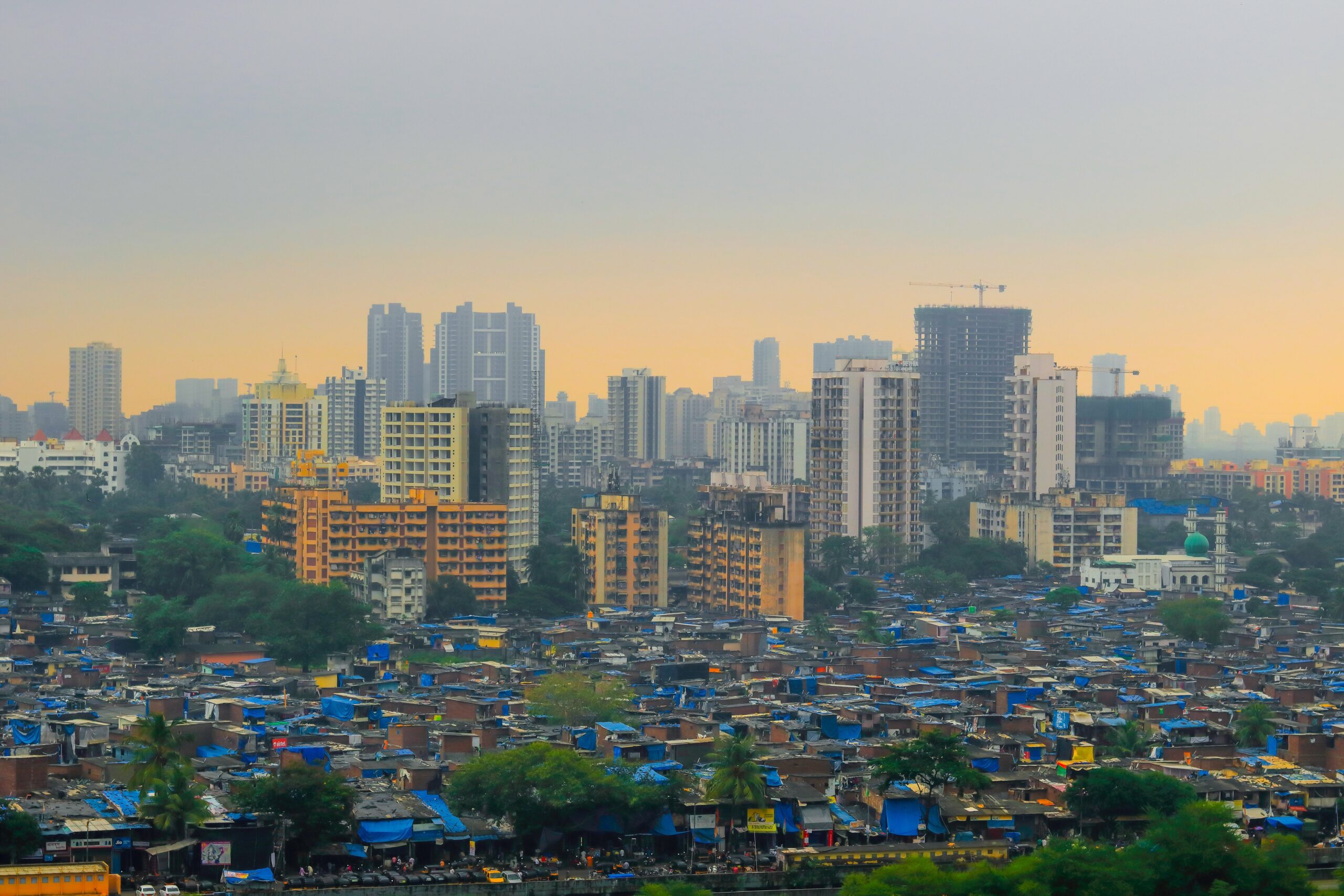
There is a serious risk that this report — for all its ambition — will be built around urban conditions that bear little resemblance to India’s. Three gaps stand out.
The data desert.
The draft’s analytical frameworks rely on high-resolution thermal imaging, neighbourhood sensor networks, and digitised land registries. Over 65 million Indians live in informal settlements with no formal title deeds, no utility connection records, and no reliable census data. Globally, over 1.1 billion people live in such conditions — a number projected to reach 3 billion by 2050. In a settlement that does not officially exist on a municipal map, the most sophisticated modelling tools in the world produce nothing. The most climate-exposed urban populations are also the least visible to the science designed to protect them.
The construction paradox.
Cement production accounts for approximately 8 percent of global CO² emissions. The draft rightly pushes for a shift toward lower-carbon building materials. But India carries a formal housing deficit of 18.4 million units, concentrated among its poorest citizens. A mandate written without understanding that constraint does not produce greener Indian cities. It produces a financing barrier to basic shelter — and a policy that, in effect, penalises poverty.
The outdoor labour crisis.
India’s construction sector alone employs an estimated 51 million workers, the overwhelming majority of whom work outdoors without any formal heat protection. Wet-bulb temperature events — where heat and humidity combine to overwhelm the human body’s ability to cool itself — are increasing in frequency across the Indo-Gangetic plain, where 600 million people live. The IPCC draft’s treatment of occupational heat stress is largely calibrated to industrial contexts in the Global North. The lived reality of an Indian construction worker in May is absent from it.
These are not grievances. They are analytical gaps that distort the science — and that Indian researchers, planners, and public health practitioners are uniquely placed to fill.
We Know What Good Looks Like
The case for Indian engagement is not built on hope alone. It is built on evidence.
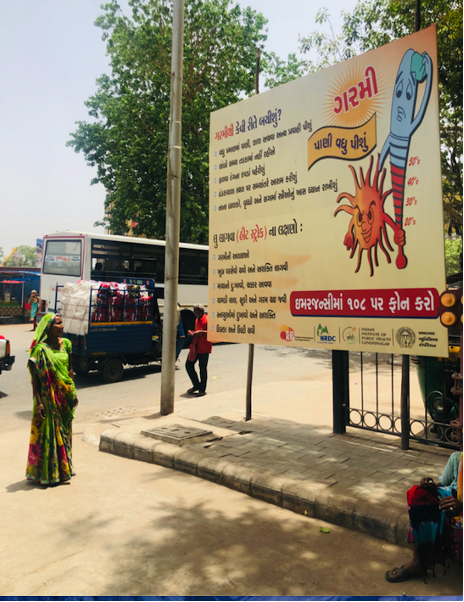
After a heatwave pushed temperatures to nearly 47°C in Ahmedabad in May 2010 and killed 1,344 people in a single month, the city developed South Asia’s first municipal Heat Action Plan. It established colour-coded early warning systems, interagency coordination protocols, and targeted outreach to outdoor workers and slum residents. During the 2015 national heatwave — which killed more than 2,300 people across India — Ahmedabad recorded fewer than 20 heat-related deaths. Independent research has credited the plan with averting approximately 1,190 deaths every year since its implementation.
Ahmedabad did not wait for a national programme or a global framework. It responded to a specific crisis with specific, locally grounded, evidence-based action. The result was not a technology showcase. It was a functioning system that kept people alive.
That is exactly the kind of knowledge the IPCC process needs — and exactly the kind of knowledge that will be missing from the final report if Indian practitioners do not submit it before 3 July.
This Is the Moment to Be Counted
The First-Order Draft received more than 32,000 comments from 1,365 registered expert reviewers worldwide. Those comments generated real revisions. The Second-Order Draft, open until 3 July 2026, is the last substantive opportunity to shape the document before it goes to governments for approval.
Indian architects, urban planners, municipal engineers, environmental researchers, and public health practitioners are eligible to register as expert reviewers — registration closes 26 June 2026; the review window runs to 3 July. Effective engagement does not require a comprehensive critique of the entire document. It requires targeted, evidence-based input in areas where Indian experience is both distinctive and underrepresented — informal settlement risk assessment, occupational heat exposure, the affordable housing and carbon materials nexus, monsoon hydrology, and the limits of data-dependent modelling in low-income urban contexts.
The frameworks this report produces will determine how Indian urban infrastructure is financed, designed, and evaluated for the next generation. Green bond standards, concessional finance criteria, multilateral bank lending conditions — all of it will flow from what this document says about what climate-resilient urban development means. Indian cities that are not in the science will be governed by someone else’s science.
The IPCC will publish its Cities report in March 2027 with or without Indian input. The difference is whether it will be useful to Indian cities — or merely accurate about someone else’s. Register at apps.ipcc.ch/comments/srcities/ before 26 June 2026 (registration closes then; review window runs to 3 July) if you’d like a say in that.
SOURCES & REFERENCES
- NASA “glowing footprint” — Nature study, April 2026, 1.16 million satellite images: nature.com
- Global urban majority crossed in 2007: UN Population Division — World Urbanization Prospects 2018
- India 37% official urban; assessments suggesting 50–63%: IIED assessments
- Cities consume 78% of world energy, generate 70%+ of emissions: IEA — World Energy Outlook 2023
- India added 90 million urban residents 2011–2021: Census of India 2021 provisional data
- 50% of India’s 2050 urban infrastructure yet to be built; $30 billion flood losses; 130,000 lives: World Bank India Urban Resilience, 2025
- 32,000 IPCC comments, 1,365 reviewers: IPCC SR Cities process documentation
- 65 million Indians in informal settlements; 1.1 billion globally, projected 3 billion by 2050: UN-Habitat Global State of Housing Report 2023
- Cement = ~8% of global CO² emissions: Our World in Data
- India housing deficit 18.4 million units: Ministry of Housing and Urban Affairs / NITI Aayog
- 51 million outdoor construction workers: ILO India Labour Market Update
- Wet-bulb events, Indo-Gangetic plain, 600 million people: Nature — Deadly heat waves projected for South Asia
- Ahmedabad 1,344 deaths, May 2010, temperatures 47°C: Exemplars in Global Health — Ahmedabad Heat Action Plan
- 2015 heatwave 2,300 deaths; Ahmedabad fewer than 20; 1,190 deaths averted annually: Aerosol and Air Quality Research, 2022