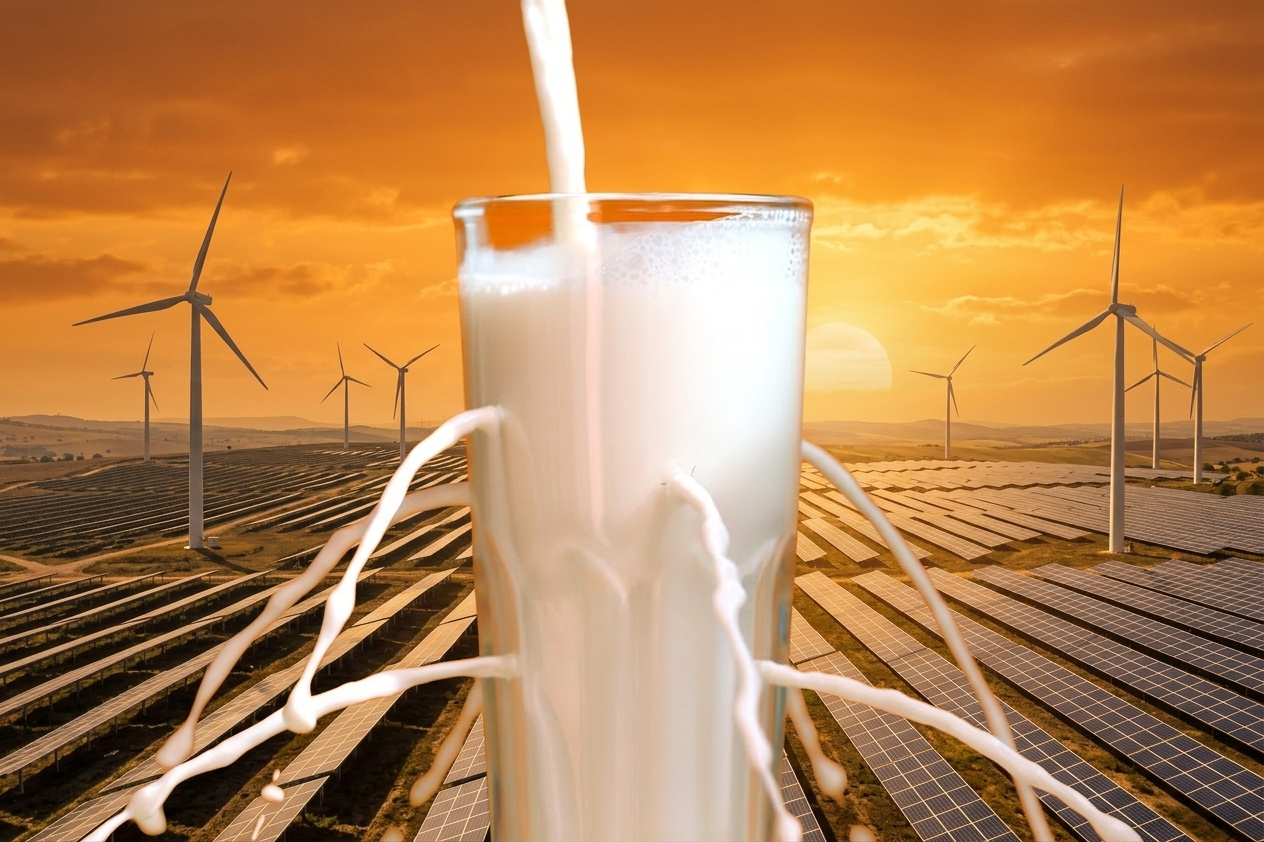
It’s hard to believe so with all the oil and carbon that humanity as spilled already in the last few decades. But as they say, don’t cry over spilled milk. It could have been water.
Swiss physician and philosopher Ignaz Paul Vital Troxler was on to something bigger than an optical illusion when he opened his eyes to an interesting effect in 1804. If one rigidly fixated one’s gaze on some element in a visual field – like a red ball with a blue boundary, this can cause the surrounding stationary parts (blue margin) to slowly disappear or fade. It so happens because the blind spot (not just metaphorical but biological too – the one where the optic nerve passes at the back of human eye) does exist and human brain tends to do a lot of ‘filling in’ both experiential and neural. ‘The Troxler Effect exists in our world too- may be we have stared too long at the ‘not so good’ that the small but significant ‘good’ has faded away from our vision.
Even if we do not completely nod along with Michael Shellenberger on Climate Change Alarmism, not all is that downbeat and hopeless when it comes to the Apocalypse many fear. Paradoxically, the alarm bells have made countries, industries, technologies and efforts start moving in a direction that could provide a sigh of relief – and another reason to keep working in these directions.
Which are- not so few- thankfully:
- Tech is not all Black
It’s true that the rise of AI and data centre footprints have given climate-worriers a lot of heebie-jeebies, but it is not a nightmare. Not in the ‘all is over- the monster is here’ sense. A latest International Energy Agency report (close to its ‘Energy and AI’ report in April 2025) ((IEA (2026), Key Questions on Energy and AI, IEA, Paris, Licence: CC BY 4.0) shows that the tech sector accounted for around 40 per cent of all corporate power purchase agreements for renewables signed in 2025, and is also now a major source of momentum for the nuclear and advanced geothermal industries. Turns out that the pipeline of conditional offtake agreements between data centre operators and small modular reactor (SMR) nuclear projects has grown from 25 gigawatts at the end of 2024 to 45 gigawatts today. Plus, proven applications of AI may assist firms in energy-intensive industries reduce their energy costs by 3 to 10 percentage points. In fact, IEA Executive Director Fatih Birol also made a comment that. “Now, we see that while AI is still an energy taker, it is also becoming an energy maker – driving forward innovative solutions like next-generation nuclear reactors, flexible data centres and long-duration energy storage.”
Look at measure per individual task, and we can at least see that the energy efficiency of AI is improving at a rate unprecedented in energy history. Software and hardware advances have resulted in the energy use per AI task dipping by at least an order of magnitude annually in recent years. It’s remarkable how simple text queries now typically consume less electricity than running a television over the same period of time. Estimates surmise that if all conventional internet searches were performed with simple AI text queries, it would consume less than 4 terawatt-hours (TWh) of electricity annually, equivalent to less than 1% of total data centre consumption today.
2. Renewing on Renewables
Fossils may still not be in the graveyard but the way solar, wind and nuclear alternatives have come on the front-burners- gives some hope. As per the International Renewable Energy Agency (IRENA)’s Renewable Capacity Data 2026, By the end of 2025, renewables accounted for 49% of global installed power capacity, and made up 85.6% of annual global power additions, – pushed by significant growth in solar and wind power – reiterating the economic case for the energy transition. The report mentions how the competitiveness and resilience of renewable power have pushed additions to new records almost every year since the turn of the millennium 2025 saw the largest increase in renewable energy capacity to date – with the addition of 692 gigawatts (GW) of renewable capacity – expanding the stock of renewable power by 15.5 per cent. Look at how Solar power accounted for nearly three-quarters of renewable additions, with a record 510 GW added during the year; and how 159 GW of wind energy was added.
3. Driving with the Green Flex
Electric Vehicles are also becoming the cool choice, as time and adaptation happen. IEA’s figures show that one in four new cars sold worldwide was electric in 2025. The electric car market shot up 20 per cent from 2024 to exceed 20 million sales- marking the fifth consecutive year in which annual electric car sales increased by about 3.5 million. We can see that about 5 per cent of the global car stock is now electrified, displacing 1.2 million barrels of oil per day in 2025. The share of battery electric cars in total electric car sales has expanded to 65% – and this is reversing the trend seen in the 2 years prior.
If we just zoom in on Europe for a bit, in January–April 2026, Europe’s battery electric car registrations recorded a 20 per cent market share, up 4 percentage points from the same period in 2025. The plug-in hybrid cars grew 2 percentage points to a 10 per cent market share (as seen in estimates by ICCT or The International Council on Clean Transportation). Registrations of conventional combustion engine cars fell by 9 percentage points to a 31 per cent market share in January–April 2026, and at the same time mild hybrids and full hybrids increased their shares to 25 per cent and 14 per cent, up 2 and 1 percentage points, respectively.
As to India, sales started to pick up in 2025, increasing 75 per cent year-on-year to reach 165 000, representing nearly 4 per cent of total car sales. Also – roughly 60 per cent of electric car sales were produced in India by domestic automakers Tata and Mahindra. The market for electric cars expanded almost 25 per cent in the year ending March 2026. Also, total passenger EV registrations stood at 25,880 units in May 2026, compared to 14,323 units in May 2025- that’s a hot 80.7 per cent YoY growth.
4. The Paws and Pastures – In India
Many environmental elephants have been finally confronted in the climate change room- specially with the challenges and fears that animals and forests struggled with so far.
In India, many strides have been taken and they are showing their footprints too. The Protected Areas network expanded from 745 in 2014 to 1,134 in 2025. Tiger Reserves went up from 46 in 2014 to 58 in 2025, covering approximately 85,000 square kilometres – new ones being the Madhav Tiger Reserve in Madhya Pradesh. Elephant Reserves also moved up from 26 in 2014 to 33 in 2025, bringing an additional 8,610 square kilometres under protection (as per data from PIB, Ministry of Environment, Forest and Climate Change (MoEFCC), National Tiger Conservation Authority (NTCA) AND Forest Survey of India).
India is moving well on other fronts too. Like renewables and recycling.
As per International Renewable Energy Agency (IRENA) Renewable Energy (RE) Statistics 2025 (with data as on December2024), globally, India stands 3rd in Solar Power installed capacity, 4th in Wind Power capacity and 4th in total Renewable Energy capacity (remember Modhera in Gujarat -India’s first 24×7 solar-powered village and the Omkareshwar Floating Solar Park in Madhya Pradesh – one of Asia’s largest floating solar parks).
The CO₂ emissions intensity of the power sector per unit of GDP has slided from 61.45 tonnes per ₹ crore in 2015–16 to 40.52 tonnes per ₹ crore in 2022–23. The share of renewable energy in total installed electricity capacity has reached 51.55% (as of November 2025. In 2025 Climate Change Performance Index, India reported reaching 50% of installed power capacity from non-fossil sources. As of December 2025, 71,401 producers and 4,447 recyclers are registered – helping in recycling of 375.11 lakh tonnes of waste. EPR certificates generation of 339.51 lakh tonnes is also in this list, out of which 237.85 tonnes has been transferred to producers.
To Wrap-up: It’s not all emotions, but economics too
A McKinsey report on Climate Change Optimism also reminds that environmental actions rhyme well with economics. It explains decarbonization- pointing out how a growing set of low-carbon technologies now directly improve cost, performance, or growth prospects, rather than requiring trade-offs against them. Many low-carbon solutions that once required subsidies now compete directly with their high-emission peers- it cites. in 2024, 91 percent of new utility-scale renewable-power projects commissioned globally delivered electricity at a lower cost than the cheapest new fossil fuel alternative- quite an example. Another one- capital costs for proton exchange membrane electrolyzers fell by roughly 90 percent between 2000 and 2020—upping the economic competitiveness of low-carbon hydrogen. Also the number of announced carbon capture, utilization, and storage (CCUS) projects could raise capture capacity to around 430 million tonnes per year by 2030.
So even if these numbers are few and may pale in comparison to ‘glass half full’, they instill confidence that every small effort is adding a drop to the ocean of a happy future. Climate Change Denial or Climate Change Alarms- both can be illusions. But let’s pick the path that leads to a better world, tomorrow.
It’s a good time to think of another illusion: the Penrose stairs. Look at them from one angle and you will see them doing down. From another angle, the stairs go up. This way or that- it’s always one step at a time.
By Pratima H
Ref: