Sustainability in Academia (Article 2, June 2025)
 Santhosh Jayaram
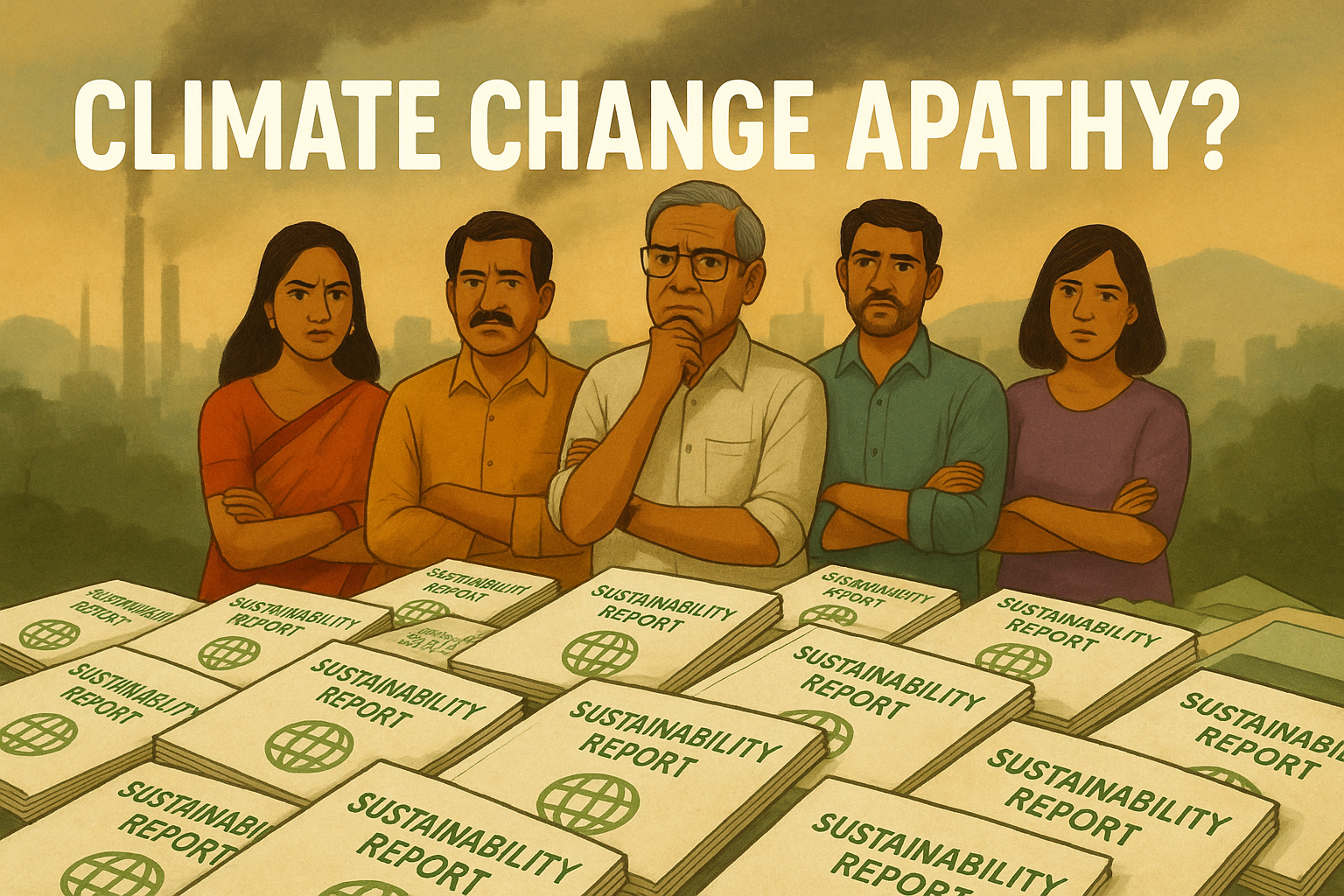
In my second review, as part of the Sustainability in Academia series, I have picked up research that shows that when corporations commit to their emission targets, they are rewarded. However, when they fail to meet or stick to the targets, there is hardly any repercussion or accountability. This is a significant concern, as we are examining a large number of companies that are committed to achieving Net-Zero by 2030. We have also seen a good number of companies rolling back their emission targets since 2024.
For my piece, I have selected a pertinent academic research article and review it to showcase the key findings without delving deeply into the research rigour. The objective is to share the key outcomes and learnings with the corporate sustainability professionals. In this review, I have taken a research article titled “Limited Accountability and Awareness of Corporate Emissions Target Outcomes“, published on 25th January 2025. (Jiang, X., Kim, S. & Lu, S. Limited accountability and awareness of corporate emissions target outcomes. Nat. Clim. Chang. 15, 279–286 2025)
It is interesting when the researchers draw parallels to earnings targets. A company missing its earnings target is often associated with a market reaction, negative media coverage, and reductions to the CEO’s remuneration, among other consequences. But the research finds that when a company misses its own stated emission target, there is hardly any reaction. If this attitude prevails, we face a significant challenge, as most emission targets are set for between 2030 and 2050. There is significance in examining this because, in 2024, temperatures on Earth already surpassed the 1.5 °C stipulated under the Paris Agreement. [1] According to a study by Generation Investment Management; Listed companies are responsible for around 40% of all climate‑warming emissions. that includes Scope 1, 2, and some Scope 3 emissions. [2]
The current paper covers emission target data for 1041 firms for 2020. The data is sourced from CDP. The good part is that out of the 1,041 firms with 2020 emissions targets, 633 (60.8%) achieved their targets. However, 88 firms (8.5%) had failed, and the surprise was the proportion of firms (320, 30.7%) where the targets disappeared. Some of the initial analysis is in line with expectations; for eg., the percentage of failed and disappeared targets is higher for firms in high-emission industry segments and across firms in countries with relatively less press freedom. However, the surprise is finding lower achievement rates for firms in countries with mandatory environmental disclosures and carbon pricing regulations. The researchers suggest that these firms may face increased pressure to achieve their targets, making it a less costly option to abandon them rather than miss them, similar to using market exit as a strategy to avoid financial regulatory scrutiny, which seems a valid explanation.
Note Specific to India: The research included 21 Indian firms, of which 10 achieved their emission targets set for 2020, 2 firms did not achieve their targets, and nine firms’ targets for 2020 were not met. This result is worse than the average across 1041 companies.

Media Coverage: Table 1 in the research paper is an interesting one, which indicates that the Media tends to pick up good news rather than bad news. There is hardly any coverage in the media on firms whose targets disappeared. While several firms acknowledge their failure to meet the target, only a minimal number of firms are covered by the media. The researchers also observe that media is covering this news based on disclosure made by the firms, as opposed to independent coverage of emissions target outcomes.
In the second part of the research, they examine potential impact scenarios for firms that failed to meet their targets. The research does not show any significant change in the trade value of volumes before and after the announcement of the failed target. Then, the researchers examined shareholder proposals to determine whether investors were posing questions; they also analysed media sentiment scores and, finally, investigated any changes in the environmental score from ESG ratings. But, as strange as it can be, the findings suggest that firms do not face any penalties for failing their emissions reduction targets.
There are significant changes observed in any of the above posts regarding the news of failed emission targets. To ensure the outcomes, the researchers examined whether shareholders had already discounted the targets over time, tracking their progress. It is possible that the targets were overambitious and hence no penalties were incurred, or it is also possible that in 2020, COVID-19 may have been the reason for no penalty. However, these additional tests showed that these alternative explanations do not explain the lack of consequences for failed emissions targets.
On the contrary, when the researchers examined announcements about the targets, although the market response was not significant, they found a significant positive movement in long-term media sentiments, as well as in environmental scores in ESG ratings. This suggests that firms receive a reward for announcing targets, but there is no consequence if they fail to meet the target. The study indicates that shareholders are indifferent during the announcement of targets as well as when the firm fails to meet them, but ESG rating agencies and media focus on the existence of emissions targets rather than their outcomes.
The study focused on firms with failed targets. But we need to realize that the media coverage is driven by the disclosure of failed targets by the firm themselves (rather than independent studies). This suggests that we may end up punishing failed firms that are transparent about their failure, and we will know nothing about those companies where the targets disappeared. We might at least learn from those firms who were forthright about stating they failed and for what reasons.
The authors end with a recommendation for a need of for complementary institutions to facilitate credible corporate environmental disclosure, drawing an analogy to financial accounting. This research is also a clear eye-opener for the media and the ESG rating agencies. The lack of interest from shareholders is a concern, but we must acknowledge that the sudden rise of ESG began in 2019, whereas this study uses data from 2020. I sincerely hope that there is some movement in investors’ interest, at least in some geographies (Except MAGA US).
There are limitations to this research, including the period covered (2020) and the potential selection bias in the sample companies. However, the message it conveys is significant. If we continue this trend in 2025 and beyond, with a substantial number of firms setting their Net-Zero targets, then there will be no sense of accountability. In January 2025, SBTI delisted more than 200 high-profile companies, failing to set near-term and Net-Zero targets. I have not seen a single mainstream media outlet in India covering this news. I will be happy to be corrected.
The bottom line is that stakeholders also have a role to play in ensuring that these firms are accountable for meeting their emission reduction targets. The media and ratings also play a significant role in sensitising stakeholders.
[1]https://theconversation.com/earth-is-already-shooting-through-the-1-5-c-global-warming-limit-two-major-studies-show-249133
[2] https://www.generationim.com/our-thinking/insights/listed-company-emissions/
Academics on Sustainability
The mainstream sustainability professional appears to be a world away from the research being conducted in the academic space. This is a series of articles I will be posting as a review of some very interesting journal articles that the academic world has put out. It will focus on the key findings and my views on their implications and takeaways. I will focus less on academic rigour and more on the key messages that will be of interest to sustainability professionals and key management personnel. I plan to do this monthly.
Article 1: Higher the ESG Score, Higher the Risk of Green Washing
Cutting through academic jargon, this monthly series distills key findings from sustainability research into actionable insights for professionals and decision-makers.


Recent Comments